In the last post we looked at the latest on the planning fight over Hertsmere’s mega data centre. Let’s zoom out: a field next to the M25 has become a small part of one of the biggest stories in the world.
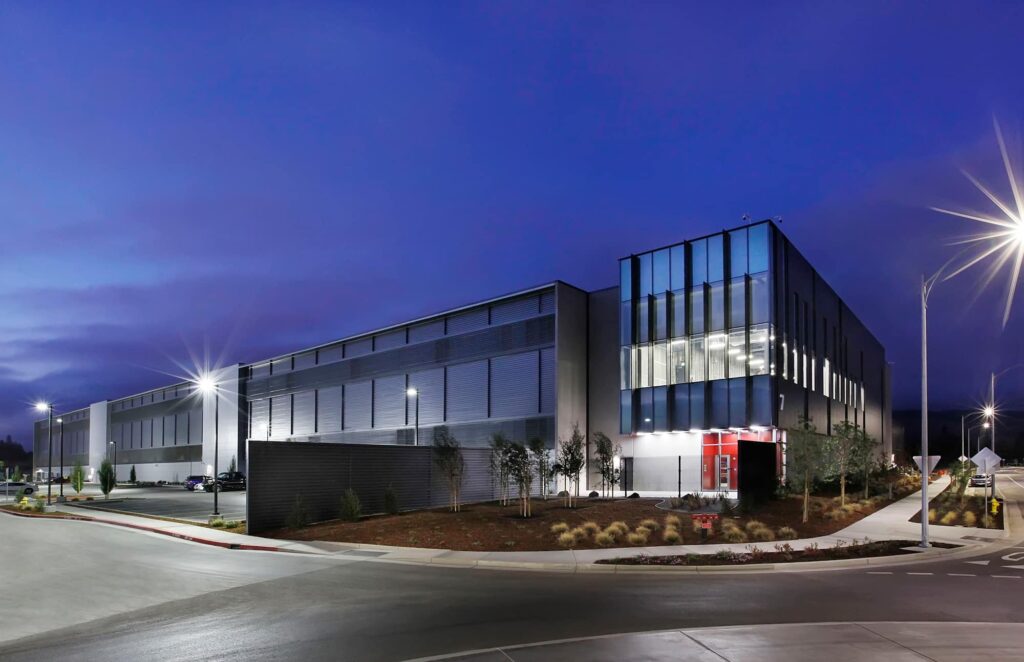
This is one of a series of posts about the South Mimms data centre: DC01UK: Hertsmere steps into history (Feb 2025); DC01UK: a demanding new neighbour (March 2025); DC01UK: data centre drama (April 2025); DC01UK: 18 months on (November 2026).When DC01UK first appeared in early 2025, it felt like a local planning story with an implausibly large number attached to it. Eighteen months later, the field to the East of South Mimms services has become part of something much larger. Data centres are the physical expression of the AI boom – the mills and factories of the fourth industrial revolution – and across the world, the people who live next to them are pushing back, just saying ‘no’. In the US that backlash has just helped swing a national election. In the industry, the opposition of communities has become a genuine threat to the pace of AI development and there’s a panicked response from the oligarchs and governments involved. And one of the issues Potters Bar residents are fighting over – noise – is turning into a problem in its own right.
The backlash goes to the ballot box
The clearest sign of how big this has become came in the US midterms on 3 November. There were 41 ballot measures about data centres across the country. According to Al Jazeera, citing the Data Centers on the Ballot project, voters were on track to reject or limit data centre development in all but one. The exception was Harwood, North Dakota, population under 800.
It wasn’t just local votes. Data centres became a campaign weapon, mostly for Democrats:
- In Ohio, which had 21 data centre votes, Sherrod Brown won back a Senate seat after making his opponent’s support for data centres a central line of attack.
- In Texas, Gina Hinojosa beat Governor Greg Abbott after calling for a moratorium on new data centre approvals. James Talarico won a Senate seat partly on promises of tighter regulation and closed-loop cooling. In drought-hit Corpus Christi, whose reservoir fell to 8% earlier this year, he won by 12 points.
- A poll in September found 70% of Democrats and 57% of Republicans supported limiting new data centre construction. This is one of the few issues that crosses party lines.
The main driver in the American context was electricity bills. Voters suspect they’re paying for the grid upgrades and power that the data centres need. The evidence is mixed. FactCheck.org found that data centres in the USA have pushed up prices in some places, notably the PJM grid that serves the Midwest and mid-Atlantic. But they aren’t the main reason for rising bills nationally. One energy economist summed it up: data centres can push prices either up or down, depending on who pays for the new infrastructure.
That last point matters here. Equinix says it will pay for any grid upgrades at South Mimms, and that local bill-payers won’t foot the bill. The site will get its own connection to National Grid’s transmission network (although it’s already been delayed). Whether that holds, and whether UK voters living near similar developments will see it that way, is exactly the kind of question that has turned into a political issue in America.
Could neighbours slow down AI?
This isn’t just politics. It’s starting to affect how fast AI can actually be built. In the first three months of 2026, local opposition blocked or delayed 75 data centre projects in the US, worth $130bn of planned construction, according to the research group Data Center Watch. As Brookings points out, that’s about as many as in the whole of 2025. Another $68bn was blocked or delayed between April and June. Data Center Watch counts 843 opposition groups, in every state except Hawaii. In July, 142 protests took place in a single weekend.
Some 30 US states have now brought in rules on where data centres can go and how much power and water they can use. In some places, communities are passing moratoriums before developers have even applied. The money is still enormous: the big tech firms have spent over $1 trillion on data infrastructure since 2023. But community consent is becoming a bottleneck alongside the chips and the power.
The markets have noticed. In the days after the midterms, Nvidia lost $450bn of market value in a single day as investors priced in tighter oversight (and this is before the CEO’s departure over another massive, geopolitical story). AI companies are adjusting their pitch: OpenAI has promised to “prioritize closed-loop or low-water cooling” and to “pay our own way on energy and infrastructure”. It has even started calling its data centres “compute campuses”. Equinix’s “Hertfordshire Campus” sounds rather familiar.
The backlash isn’t only American. Al Jazeera reports that protesters broke into a Microsoft AI data centre site in Amsterdam. In the UK, the Government’s line is still firmly pro-data centre: they’re designated critical national infrastructure, the planning rules have been loosened, and there’s a push for “AI Growth Zones“. South Mimms is a test of whether that line holds up when it meets a well-organised community.
The noise you can’t hear
Power bills started the backlash, but noise is catching up. Data centres are noisy in two ways. There’s ordinary noise: thousands of cooling fans, chillers, transformers and, during tests or power cuts, big diesel generators. And there’s the more contested kind: infrasound and low-frequency noise, which is below or near the edge of human hearing but which some neighbours say they can feel. An American research group, set up by the US Congress, reports that residents near US data centres are complaining of headaches, insomnia, nausea and anxiety, and that local governments are citing noise when they impose moratoriums.
The honest answer is that nobody knows yet how big a problem this is. The most thorough look so far is a review published in August in the journal Clean Technologies. It found that no published study has measured the low-frequency sound of a working data centre, or checked it against the health of workers or neighbours. Research on wind turbines and industrial sites does link low-frequency noise to sleep disturbance and stress responses. But that hasn’t been tested for data centres.
The review makes one point that matters a lot for places like South Mimms. Standard noise assessments use “A-weighted” decibels (dBA), which are designed to match what the human ear hears. That means they heavily discount low frequencies: by more than 26dB at 63Hz, and over 50dB at infrasound frequencies. A noise assessment can show a data centre comfortably within limits while saying very little about the low rumble neighbours complain of. The authors want data centres measured properly across the low end, from 1Hz to 200Hz, before anyone writes design standards.
The argument in Potters Bar
This is exactly the argument now going on in the Phase 1a file. SIGRA’s noise expert, from the Industrial Noise and Vibration Centre, raised tonal and low-frequency noise, the combined effect of all four phases and the likely effect of testing a big generator fleet in a valley. Equinix’s consultants, Arup, replied that the equipment makers haven’t provided any evidence that the sound is tonal (meaning noise that is confined to specific frequencies). So they’ve treated it as broadband noise, and modelled a worst case with everything running flat out on a 40°C day. Equinix says operational noise will stay below background levels at the nearest homes.
The generators add another layer. The latest plans include 185 of them, up from about 144 at outline stage. Testing adds up to 2,220 hours a year, about 12 hours per generator. Equinix says testing will be limited to weekday daytimes and Saturday mornings. Both sides may be right on their own terms. The question the research hasn’t answered yet is whether “within limits” means “fine to live next to”.
A new kind of opposition
The 843 American groups that Data Center Watch counts now have a cousin in Potters Bar. The Potters Bar Special Interest Group Residents’ Association (SIGRA) is a good example of how the opposition is changing. SIGRA has raised money to commission its own experts: Kalaco Group, whose Kieran Laxen is a full member of the Institute of Air Quality Management, reviewed the air quality assessment, and the Industrial Noise and Vibration Centre reviewed the noise work. Its objections to Equinix’s first detailed application accept that the principle of the data centre is settled. They concentrate on what the council can and can’t approve at this stage, and on whether the original environmental assessment still holds now that the generator count has gone up.
Its members have measured the Bridgefoot Lane gateway themselves, found the generator figures that didn’t match and asked who agreed to more than double the drainage discharge rate. They’ve complained to the Local Government Ombudsman, used freedom of information requests and asked for the application to go to the planning committee rather than be decided by officers. (We go through all of this in our planning update.)
SIGRA obviously has a lot of local support. The University of Hertfordshire’s report Responsible Data-Centre Siting, by Aleksandra Peeroo and Christina Wolf, is based on a Survation poll of 204 Potters Bar adults in June 2026:
- 62% oppose the data centre and 8% support it.
- 74% have concerns and 75% expect no local benefit.
- 80% feel residents’ views get little or no consideration.
The authors argue this isn’t simple nimbyism. People question whether the scale and location were ever justified and they feel shut out. One of the report’s themes is “unequal resources and power”: volunteers trawling planning portals and chasing information requests up against a global company with a team of consultants. SIGRA has narrowed that gap, but only through fundraising and a huge amount of unpaid time.
The researchers’ recommendations will sound familiar to anyone following the American debate: a national strategy on how many data centres we need and where they should go, a fair share of the benefits for the people who live with the costs, earlier and genuine consultation, independent expert capacity to check developers’ claims and enforceable promises.
Is Hertfordshire the right place?
The biggest question is one the planning system isn’t really built to ask: should a data centre this size be next to the M25 at all? CPRE Hertfordshire’s April 2026 report argues it shouldn’t. Its case goes like this:
- Speed matters less than claimed. The main argument for building near London is low latency for City users. But CPRE says the extra two or three milliseconds from the north of the UK won’t matter for most uses.
- The power is in the wrong place. The wind is mostly in Scotland, where wind farms are sometimes paid to switch off because the grid can’t carry the power South. Putting data centres near that power would ease the strain on the grid, rather than adding to it.
- Green belt. South Mimms and the 96MW Abbots Langley data centre (approved by the Government on appeal in May 2025) both take farmland in the Metropolitan Green Belt.
The report compares South Mimms’s 400MVA grid reservation, a peak of about 360MW, to the whole of St Albans district, with 150,000 people, which draws about 135MW. (CPRE took the 360MW figure from the estimate we made in an earlier post here, which is kind of flattering, but we do hope they checked our numbers).
In its response to Equinix’s first detailed application, CPRE went further, calling for “a coordinated programme of data centre provision” rather than speculative schemes in the countryside. That’s the same national strategy the University of Hertfordshire researchers are asking for.
None of this will stop South Mimms. The outline permission is granted, the land is sold and the grid connection is booked for 2031. But the arguments are gathering, here and abroad. The US midterms showed what happens when the people living next to the AI boom feel it’s been done to them rather than with them. We hope that Hertsmere and the Government are paying attention.
- Something new since the last time we wrote about the data centre: we’ve made careful use of an AI (Claude to be specific) in trawling the planning documents (mainly for this post). Everything’s been checked but there’s obviously a chance that Claude has made mistakes or introduced hallucinations. If you spot anything wrong with our data or with the information from the planning documents, please leave a comment or send us an email.
- There are hundreds of documents on the Hertsmere planning portal and we have not read them all. If you think we’ve missed anything important, made a mistake or got the emphasis wrong, please leave a comment or send us an email. We’ll correct or update the post.
Leave a Reply